

In the pet food industry, whether or not Pet Food distributors should sell retail has never been a question with a single, universally agreed-upon answer. One side views it as taboo and disruptive to the system, while the other considers it a normal business right for investors. This article compares these two arguments, weighing the pros and cons, before drawing a conclusion.
The debate is real, not a question with a pre-determined answer.
Much of the writing on this topic begins with a predetermined conclusion, then seeks to justify it. This writing style is easy to read but doesn’t help those actually making decisions. The reality of the Vietnamese market shows that many pet food distributors sell retail alongside wholesale, and they are not uninformed. They have specific business reasons, specific cash flow calculations, and in the short term, this choice often proves effective. The pet food industry is still young, and the boundaries between importers, regional distributors, and points of sale are not as tightly defined as in the dairy or pharmaceutical industries, so this debate will continue. For dealers, the correct approach is to avoid accepting emotional answers from any side and instead demand arguments that can be verified with data and contractual terms.
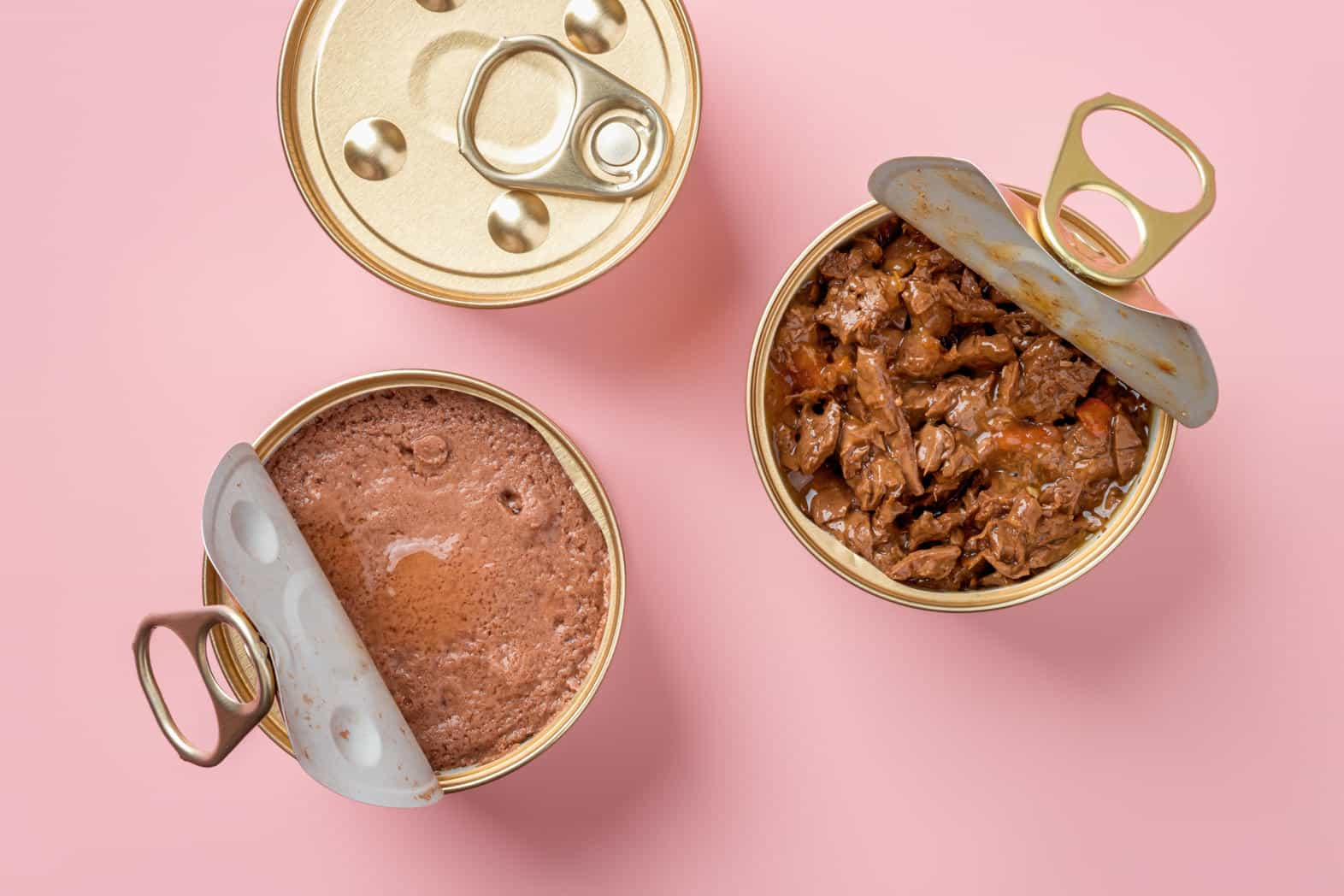
The real reasons why Pet Food distributors sell retail
It must be frankly acknowledged that the motivations for retail sales are not unreasonable. Firstly, there’s the speed of revenue: a single order is paid immediately, while wholesale sales involve thirty to sixty days of credit and a container sitting for months. Secondly, there’s the profit margin, because the difference between the wholesale and retail prices is something the source sees daily but doesn’t benefit from. Thirdly, there’s the data, because direct sales provide precise information about who buys, which product code, and how often they return, while sales through distributors keep that information at the warehouse. Fourthly, there’s the ability to quickly test a new product line without having to convince dozens of sales points to import it. Fifthly, in provinces without existing partners, goods simply won’t reach farmers unless the source sells directly. Distributors should understand these five motivations, because understanding their partner’s motivations is essential for negotiating powerful terms.
The price to pay doesn’t show up in the monthly report.
The problem is that retail sales revenue is immediately reflected in the monthly report, but the cost isn’t. Channel conflicts don’t erupt with a heated argument; they occur through small, silent adjustments on the distributor’s side. A pet shop owner who discovers their supplier is selling directly to customers won’t call to complain; they’ll simply reduce their order to a minimum inventory level to avoid tying up capital. Next, they’ll stop allocating prime shelf space to that brand, stop including it in their sales pitches, and stop spending on printing and display. Finally, they’ll quietly find an alternative source and gradually shift customers to another brand. This entire chain reaction takes six months to two years—a long enough time for no one to pinpoint the cause. Distributors should clearly state their interests are being affected as soon as they discover the issue, instead of silently withdrawing and missing the opportunity to force their partner to make adjustments.
A non-commercial showroom is the most acceptable variant.
Between the two extremes of purely retail and purely non-retail, several intermediate variations are being applied, and they are not all equally valuable. The mildest is the model of a showroom located in a warehouse or office, used for testing display methods, taking product photos, training sales staff for the system, and allowing new partners to view the catalog in person. This variation is acceptable, provided that very specific conditions are met: all transactions conducted there are at the listed retail price, no special promotions, no provincial deliveries, and no online orders. By adhering to these boundaries, the showroom does not steal customers from anyone but instead creates a display standard for the entire system to follow. Dealers should request to visit the supplier’s showroom, both to get ideas for shelf arrangement and to verify whether the store is engaging in price dumping.
Retailing under a different brand and the risks of exposure.
The second variant is more sophisticated: the source establishes a separate legal entity or store under a different name to conduct retail sales, keeping the connection to itself secret. The common argument is that this prevents the system from being affected because the distributors are unaware. This is where it needs to be stated frankly that this argument is flawed on both sides. Market-wise, the price-cutting effect remains intact, because customers compare prices based on the product, not the seller’s name, and an unusually low price will still drive down the overall price level regardless of who is behind it. In terms of relationships, the pet distribution industry in Vietnam is a small community; the ownership of each store is often discovered through matching warehouse addresses, delivery phone numbers, or batch codes. When exposed, the damage is far greater than in open retail, as the loss is no longer just sales but reputation. Distributors should consider transparency regarding channel ownership as a criterion for choosing partners.
Nationwide online sales are the most dangerous variant.
The third variant sounds modern but is actually a form of blatant price dumping: the supplier opens an official store on an e-commerce platform and sells nationwide. Unlike a physical store that only affects a radius of a few kilometers, an online store competes simultaneously with the entire network of retail outlets, in every province and city, 24 hours a day. The publicly displayed price even becomes a benchmark that customers use to bargain at the counter. According to Metric data from 2025, the pet supplies industry on e-commerce platforms has thousands of sellers competing, with Shopee accounting for approximately 65.4% of revenue and TikTok Shop around 30.6%, so all prices are within a buyer’s reach in just a few seconds. In this context, a store operated directly by the supplier is almost certain to offer the lowest prices on the market. Distributors should check the supplier’s online channel before signing a contract, not after receiving the first order.
A reasonable exception may be made in areas without a dealership and subject to certain conditions.
There is one case where direct selling is reasonable and difficult to argue against: an area where no distribution partner has yet taken over. In many provinces, production is insufficient for a pet shop to sustain itself with that brand, so if the source doesn’t supply, local breeders simply can’t buy officially imported goods, and that demand will shift to parallel imports. However, this exception only holds true under three conditions. First, sell at the listed retail price, without using the advantage of lower cost to offer prices below the general market rate. Second, treat this as a temporary, time-limited arrangement, coupled with a genuine effort to find a partner in the area. Third, once a distributor is found, the entire customer list for that area must be transferred, including existing customers. The distributor about to take over an area should directly ask the supplier how many individual customers there are and what the handover mechanism will be.
A single-price policy is a minimum requirement for maintaining two channels.
If a business decides to maintain a parallel distribution channel, selling both through distributors and directly to consumers, there is a boundary that cannot be crossed: a single-price policy. This principle states that anyone buying retail, regardless of where they buy, pays the same listed price. In other words, a retail Pet Food distributor who wants to maintain the system must tie themselves to the same price that distributors are selling at, and cannot consider themselves exempt. The meaning of this is to shift the focus of competition away from price and towards service, consultation, convenience—things where local sales points have a natural advantage. This must be accompanied by transparent wholesale pricing based on sales volume, so that each distributor knows their current level and how much they need to sell to move to the next level. Distributors should request a written price list based on sales volume and consider refusal to provide it as a signal to be considered.
How dealers verify whether a Pet Food distributor is a retailer.
The partner’s word is just the starting point; the rest must be verified, and the process isn’t complicated. The first step is to check the product name and packaging code on major online marketplaces, filter by stores with official markings, and then compare the shipping warehouse address with the supplier’s address. The second step is to place a small order under someone else’s name and check the invoice, the shipping company name, the sender’s phone number, and the batch code printed on the packaging. The third step is to ask other distributors in the area if they’ve encountered customers trying to bargain over the online price, as this is the earliest sign. The fourth step is to observe the brand’s live sales sessions, paying attention to who the sellers are claiming to be. Distributors should perform these four steps periodically, not just once before signing a contract, because a company’s policies can change unexpectedly.
Petkin answers the question of how Pet Food distributors sell retail.
After weighing both sides, our view is that the benefits of retailing can be achieved through other, less damaging avenues, while the losses are irreparable. If you want consumer data, obtain it from the point-of-sale system and exchange it for substantial support. If you want to test a new product line, work with a few trusted distributors. If you want to cover a niche market, sell at the listed price and deliver when a partner is secured. Petkin, an importer and distributor of pet food, chooses not to sell directly retail because, with only about 5% of dogs and cats in Vietnam using specialized pet food according to the Ministry of Agriculture and Rural Development, the biggest challenge for the industry is convincing the rest, and that work takes place at the retail counter. If you are choosing a long-term supplier, ask this question to every supplier and verify the answer yourself.