

For agents or businesses considering importing goods under their own name, the first question isn’t where to go about the procedures, but whether their products meet the requirements. This article systematically reviews the current import conditions for pet food, from the framework documents and supporting documentation to technical standards and labeling requirements, so you can verify the source of goods before signing a contract.
Why are Pet Food subject to regulations regarding animal feed?
Many newcomers to the industry assume that pet food is just ordinary consumer goods, requiring only an invoice and customs declaration. The legal reality is quite different. Pet food for dogs and cats is regulated like animal feed, meaning it falls under the category of conditional goods, subject to specialized management by the Ministry of Agriculture and Rural Development, not just customs authorities. This classification explains everything that follows: why the product must be declared before sale, why quarantine is required, and why it must be compared with national technical standards. Understanding this true nature helps distributors avoid the most common mistake: evaluating a shipment solely based on cost price and delivery time. Before asking for the price, ask if the product meets the legal requirements for imported animal feed, as this is what determines its long-term marketability.
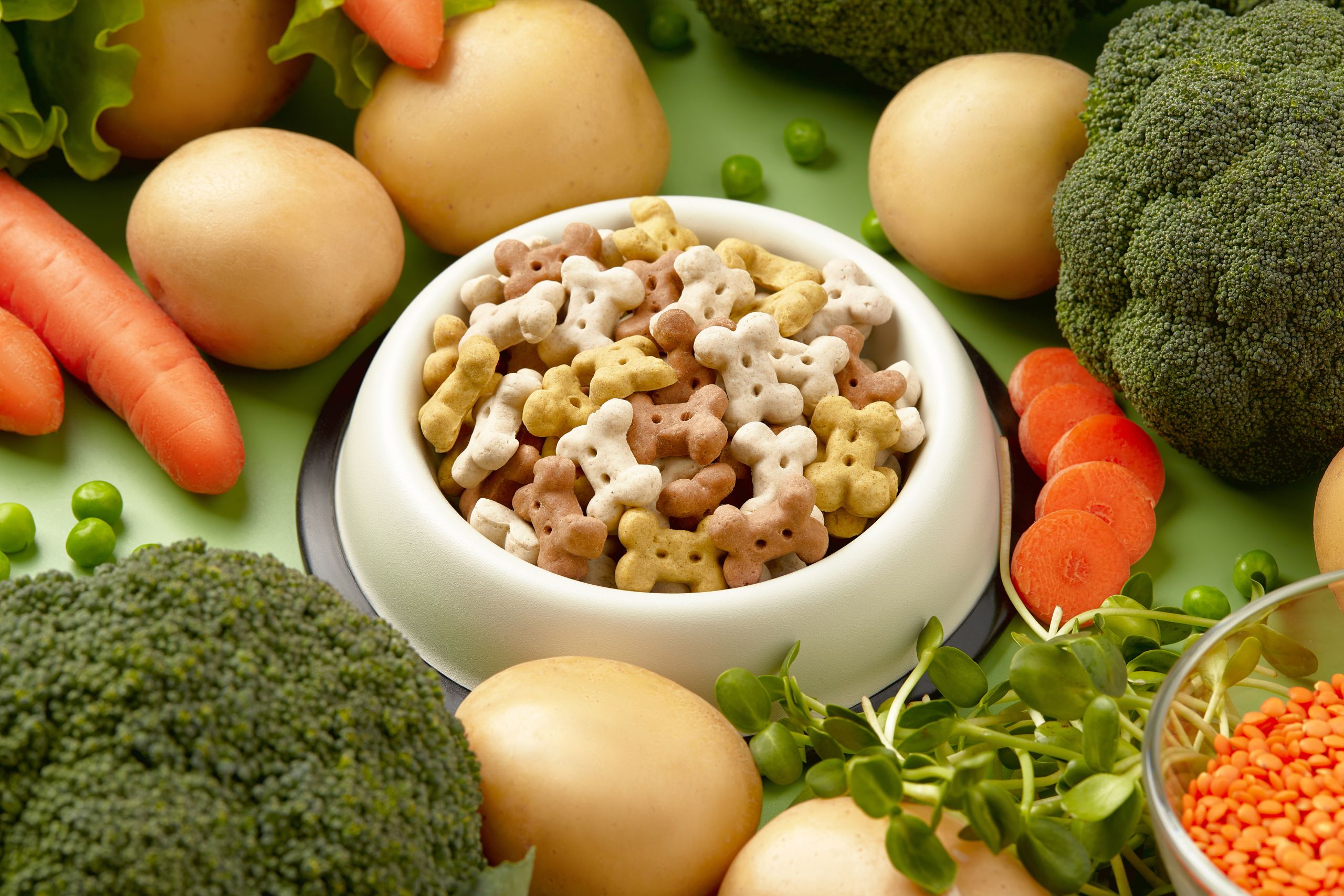
Map of current regulations governing pet food import conditions.
The import requirements for pet food are not contained in a single document but are spread across multiple layers. The original document is the 2018 Livestock Law. The implementing guidelines are Decree 13/2020/ND-CP, effective from March 5, 2020, and replacing Decree 39/2017/ND-CP. This is a point that needs special attention, as many online guides still cite Decree 39/2017 as the current regulation, even though this document is no longer in effect. At the circular level, Circular 21/2019/TT-BNNPTNT provides guidance on animal feed, Circular 25/2016/TT-BNNPTNT regulates the quarantine of terrestrial animals and animal products, and Circular 30/2014/TT-BNNPTNT specifies the list of objects subject to plant quarantine. For distributors, the practical significance is very clear. When a supplier’s offer document still cites outdated text, it signals that their records are not up-to-date, and you should request clarification before committing to an order.
Prerequisite: The product must have its information disclosed.
Of all the regulations for importing pet food, this is the most important and also the most often overlooked condition. Products intended for import and sale in Vietnam must have their information published on the electronic portal of the Ministry of Agriculture and Rural Development, received by the Department of Animal Husbandry. Products without published information cannot be imported for sale, regardless of how famous the brand is abroad or which market it has been a bestseller in. This condition is specific to each product, not to the business, so a supplier who has been importing for many years does not automatically guarantee the quality of a new product they are offering. Therefore, when receiving a price list, the first thing a distributor should do is compare the product name and specifications with the published information. A product code that sounds attractive but is not on the published list is a risk for inventory, not an opportunity.
The documentation proving eligibility and processing time is approximately 20 days.
Product information disclosure is not a formal declaration but a process of proving product eligibility through documentation. A typical dossier includes an application form, a free sale certificate or equivalent document issued by the exporting country, a quality management system certification such as ISO, GMP, or HACCP for the manufacturing plant, a list of ingredients and quality indicators, a product quality analysis report, and a sample label. The processing time is approximately 20 days from the date the Department of Animal Husbandry receives a valid dossier. The word “valid” here is crucial, because incomplete or inaccurate dossiers will cause this timeframe to be extended indefinitely. For distributors, the 20-day period is directly related to planning: a completely new product line cannot be on shelves in a few days, and any promise of expedited delivery for an undisclosed product is suspicious from the outset.
Conditions regarding published technical standards and quality indicators
The second condition lies in product quality, measured by national technical standards. Two directly related standards are QCVN 01-78:2011/BNNPTNT, applicable to animal feed raw materials, and QCVN 01-183:2016/BNNPTNT, applicable to complete mixed feed and concentrated feed. The inspection content includes all indicators in the corresponding standards, plus at least one quality indicator according to the standards self-declared by the enterprise. The inspection agency is designated by the Ministry of Agriculture and Rural Development, possibly the Department of Animal Husbandry, the Department of Veterinary Medicine, or the Department of Plant Protection, with a response time of approximately seven working days for quality inspection applications. It should also be noted that complete mixed feed and traditional raw materials are inspected after customs clearance, while concentrated feed must be inspected before customs clearance. This difference explains why the same supplier may have different product delivery schedules for different product groups.
Quarantine conditions are linked to the nature and composition of the product.
The third condition depends on the product formula itself. Most pet food contains animal-derived ingredients, so animal quarantine must be registered with the Department of Animal Health before shipment, according to Circular 25/2016/TT-BNNPTNT. For products containing plant-derived ingredients, the list of objects subject to plant quarantine in Circular 30/2014/TT-BNNPTNT is the basis for determining the corresponding obligations. In other words, quarantine conditions are not fixed for every shipment but change according to the ingredient list, and this is why the ingredient list must be accurate from the negotiation stage with the factory. A positive point is that administrative infrastructure has improved significantly, with the veterinary sector implementing fifteen procedures on the National Single Window Mechanism. For distributors who do not directly import, it is advisable to ask the supplier for the quarantine documents for each specific batch, as the quarantine documents are linked to the batch, not the brand.
Exceptions to Article 41 and boundaries that may not be crossed.
The law does provide loopholes for certain specific situations. Article 41 of the 2018 Livestock Law allows the import of animal feed that has not yet been officially declared in five categories: for trade fairs and exhibitions; acclimatization; research; laboratory analysis; and production and processing for export. These cases must be approved by the Minister of Agriculture and Rural Development. It’s important to state clearly that this is not a loophole. Each exception is linked to a specific use and does not permit the goods to be sold to consumers. Goods imported under exhibition status that appear on pet shop shelves are for the wrong purpose, and the final seller bears the direct risk. Therefore, if a source of goods is presented as exhibition samples or research goods at an unusually low price, the distributor should refuse them instead of trying to justify the import.
Requirements for Vietnamese supplementary labeling and import tax obligations.
The final set of conditions lies in the stage where goods come into contact with the buyer. Imported goods must have original and supplementary labels in Vietnamese, showing the product name, ingredients, quality standards, usage instructions, production date, expiration date, and the name and address of the organization responsible for the goods and their origin. This is the easiest sign to visually inspect at the counter and is also the first piece of evidence that market inspectors look at. In terms of classification, dog and cat food belongs to HS group 2309, where code 23091010 is for products containing meat and code 23091090 is for other types. The preferential import tax rate is often mentioned as 7% and the value-added tax is 5%. It should be emphasized that this is only a reference rate, as the tax schedule changes periodically and according to free trade agreements, so businesses are required to consult the current tax schedule when calculating the actual cost of goods sold.
What documents should dealers request from suppliers?
While most distributors don’t import directly, they still stand before consumers and regulatory authorities, so checking the source documentation is a right, not a burden, for their partners. The minimum requirements should include proof that the product has been correctly labeled and sold according to specifications, a free sale certificate or equivalent document from the exporting country, ISO, GMP, or HACCP certifications from the factory, a quality analysis report, quarantine records for the shipment, a sample of the Vietnamese supplementary label, and valid invoices and supporting documents for each delivery. A reputable supplier will provide these documents without much persuasion. Conversely, evasiveness or vague answers are more reliable indicators than any verbal commitment. Make this request during the initial meeting, rather than waiting until the goods are already in storage.
What are Petkin’s views on the import requirements for Pet Food?
Petkin is an importer and distributor of pet food, not a direct retailer. Therefore, the entire value we create lies in our network of dealers who can sell our products reliably and sustainably. For us, the import requirements for pet food are not a burdensome procedure but a protective barrier for serious businesses. When product information disclosure, quarantine, and labeling are fully implemented, the competitive advantage shifts from whoever gets the cheapest price to whoever has the most transparent and stable supply source. That’s why we choose the official route and are willing to be transparent with our documentation to our partners. If you are a pet shop owner or dealer and want to standardize your supply chain, start by reviewing the documentation for each product line you sell. This is the least expensive step but provides the most protection for your business.