

There are two ways for a foreign pet food brand to reach Vietnamese shelves: the business can import Pet Food directly from the factory, or it can purchase from a supplier that already has the product in stock domestically. These two options differ in terms of capital investment, control, and the lifespan of the business model. This article compares them based on those very points.
Two ways to bring goods into Vietnam and the differences between them.
Before making a comparison, it’s necessary to clearly distinguish between the two models because, in practice, they are often confused using the same term, “import.” In the first model, Vietnamese businesses sign contracts directly with foreign factories, are named on the bill of lading, are responsible for product documentation, and have complete control over the entire shipment from the moment it leaves the port until it arrives at the warehouse. In the second model, businesses purchase goods already stored in another unit’s warehouse in Vietnam, meaning they buy domestically even though the product originates from abroad. The difference lies in a single question: whose name appears on the import documents? Whoever’s name appears on the documents has the right to decide on the cost price, documentation, and source of goods. The other party, even if selling the same product with the same packaging, is merely a reseller. Agents choosing a partner should ask this question directly before any questions about discounts.
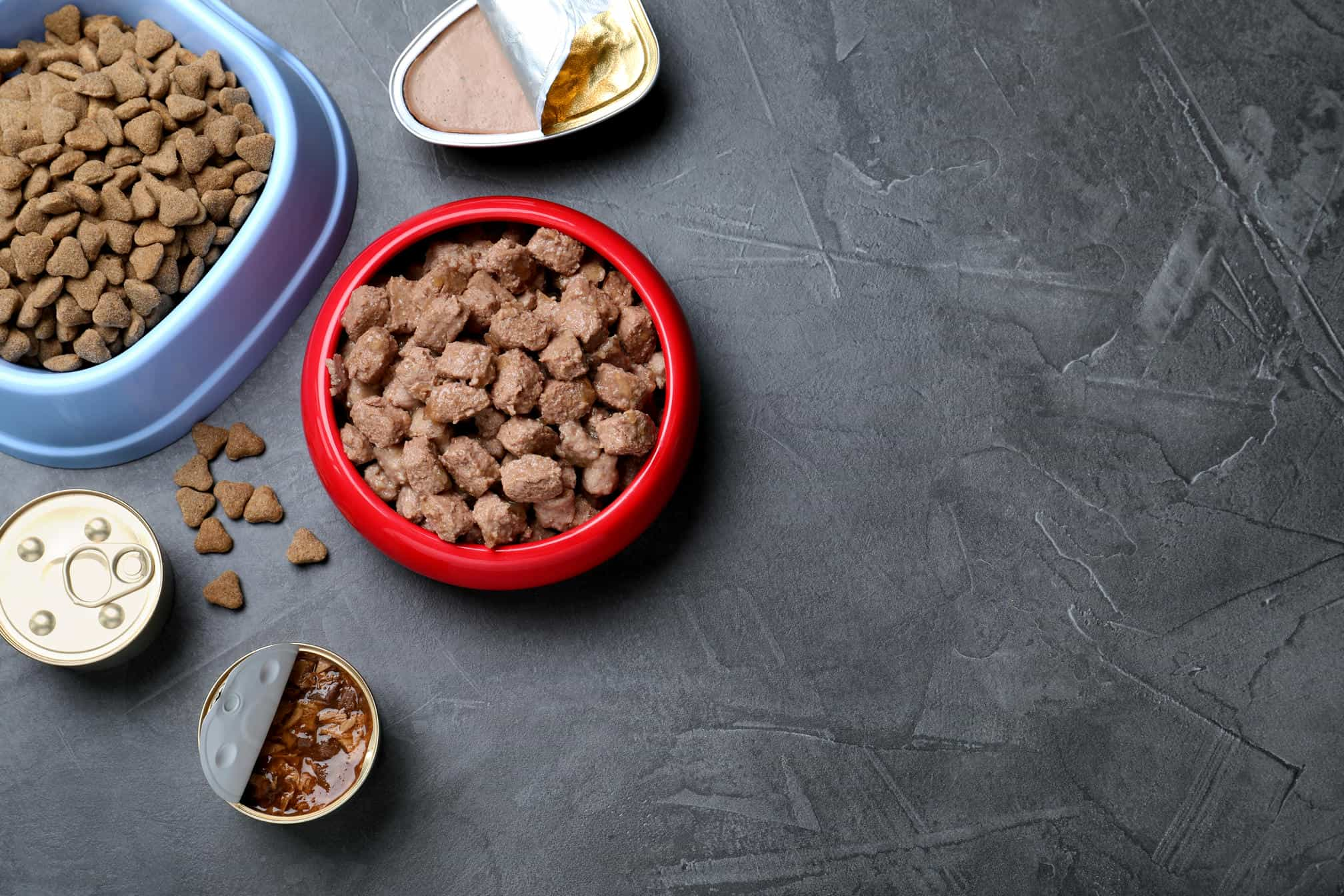
Importing pet food directly means being the registered owner of the entire shipment.
Choosing to import Pet Food directly means accepting the heaviest burden of the supply chain in exchange for control. Businesses must have the necessary infrastructure to assess factories, prepare product declarations, register for quarantine, handle customs procedures, and manage a large amount of capital sitting idle in containers for weeks. In return, they possess something that other models never have: a direct link to the production site. When customers inquire about the origin of the raw materials, they can answer. When a batch has a problem, they can directly complain to the factory instead of waiting for someone else to do it for them. When they want to adjust packaging specifications or add a product line for the Vietnamese market, they have someone to discuss it with. For distributors, the practical value of this is very clear: the supplier can answer difficult questions instead of passing the responsibility up to the higher levels.
Buying back goods already in the warehouse: lower capital investment, but the goods are not your own.
Importing through intermediaries is very attractive, especially in the initial stages. Businesses don’t need large capital, a complex documentation system, or waiting for ships, and can obtain goods in small quantities exactly matching their sales needs. All inventory risks, exchange rate risks, and port delays are borne by others. However, the price of this ease is ownership of the supply. Buyers cannot decide when the goods arrive, how much the supplier will keep in stock, or whether the next shipment will be available. They are building revenue on a supply source they don’t control. This is acceptable when the scale is small, but becomes dangerous once a loyal customer base is established for the product. Agents need to clearly understand: selling goods does not automatically mean having a reliable supply source.
Cost of Goods Sold Axis: Who Decides the Final Number?
The most noticeable difference between the two models lies in the cost of goods sold structure. Direct importers have their cost of goods sold derived from the ex-factory price, freight, taxes, and processing fees. In HS code 2309, the preferential import duty of approximately 7% and the value-added tax of 5% are reference levels; businesses still need to consult the current tariff schedule and applicable trade agreements. The key point is that all components are visible and can be optimized by increasing volume per shipment or renegotiating delivery terms. Buyers through intermediaries, however, have a single cost of goods sold provided by the seller, which already includes their profit margin and cannot be separated. Consequently, their ability to stabilize selling prices differs significantly. One side proactively maintains prices for the entire year, while the other must adjust prices every time the source changes its price list. Dealers should ask the supplier for a commitment to price stability.
Quality control system and records for each batch.
The second key issue is the ability to control the supply chain at the batch level. The importer holds the original documentation: the free sale certificate, the factory’s quality management system certificate, the quality analysis report, and batch numbers and expiration dates that match the actual goods in stock. They know exactly when their goods were produced and how they were stored during transit. The buyer, however, only receives what the seller is willing to provide, usually an invoice and a few copies. When the end customer complains about quality, the gap between these two positions becomes apparent: one side can trace back to the production shift, while the other can only forward the question and wait. For pet shops, this isn’t just about paperwork; it’s about problem-solving capabilities. Ask your supplier to show you the original documentation for the specific batch you’re importing, not the general brand documentation.
Continuous supply chain and speed testing of a new product line.
The two models are reversed on the next two axes. In terms of continuity, direct importers clearly win because they schedule orders according to the sales plan of the entire system and maintain buffer inventory between shipments. Buyers through intermediaries depend on the import rhythm of other suppliers, so a supply shortage at the source immediately results in a shortage at the counter. However, the speed of market testing is the opposite. To test a new product line, buying a few hundred bags from a supplier that already has stock domestically is the quickest and cheapest way; direct import requires waiting for product information disclosure documents, which take about 20 days to process, plus production and shipping time. The lesson learned is very practical: use an intermediary model to gauge demand, and only switch to direct import when that product line has proven to have consistent production.
Negotiation rights with the factory and exclusive distribution opportunities.
There’s one thing the acquisition model can never achieve: the right to negotiate directly with the factory. Only the importer can sit at the table to discuss pricing based on committed production volume, market cost support, specific specifications for Vietnam, and most importantly, distribution rights. An exclusive importer with territorial protection clauses can control the entire selling price of the brand in the market, effectively eliminating price dumping that every distributor fears. Buyers through intermediaries have no say in any of these matters and always face the possibility of the same factory signing with a larger entity. This is the underlying reason why serious businesses eventually have to become the sole importer. Distributors seeking long-term price stability prioritize brands with a clear, exclusive distribution channel in Vietnam.
Few people fully account for the hidden costs of importing pet food directly.
To be fair, importing pet food directly isn’t as cheap as simple calculations often suggest. Beyond the visible costs of importing pet food—purchase price, shipping, and taxes—there are a host of hidden expenses. Capital sitting in containers for weeks represents a real opportunity cost, especially when ordering large quantities to secure favorable prices. Documentation takes time before goods are allowed to arrive, so planning must be done months in advance of the market. Goods may be held at port due to missing documentation, and each day of container storage incurs charges. After the goods are in storage, there are costs for cold storage, expiration date management, and the risk of near-expiry dates—in an industry with a finite product lifecycle. Businesses that underestimate these costs will find their actual cost of goods sold is higher than anticipated. For distributors, understanding this helps them accurately assess the sustainable discounts that importers can offer.
When is buying through an intermediary still a good idea, and when should you stop?
In conclusion, each model has its own reasonable range. Buying through intermediaries is the right choice when a business is testing the market with a product line whose demand is unclear, when production volume is too small to fill a container, or when it lacks the necessary documentation and warehousing infrastructure. At that stage, paying an additional profit margin to an existing supplier is a reasonable price for flexibility. However, switching to self-management is necessary when three signs appear: production has been consistent for many months, selling prices are becoming so heavily influenced by the supplier that the system becomes unsustainable, and the business wants to build a long-term brand instead of selling in bulk. The biggest risk of the intermediary model is not a few percent higher price, but dependence: if the supplier stops importing, changes policies, or switches to selling directly to your customers, you will lose your entire revenue stream.
Petkin observed how the two models were being brought in.
Petkin chose to operate under its own name because it believed only this model was sustainable enough for long-term distribution. According to the Ministry of Agriculture and Rural Development, pet food imports have increased by approximately 69% in five years, while specialty stores still account for about 72.44% of the industry’s revenue, according to Mordor Intelligence. Such a rapidly growing and point-of-sale market demands a consistent supply and stable pricing. These are two things that can only be guaranteed by securing contracts with factories, having access to shipment records, and knowing your own import schedule. Therefore, Petkin follows a dealer-based distribution model, not direct retail sales, and maintains control at the source to ensure price stability for the downstream system. If you are choosing a long-term partner, ask them where they stand in the supply chain before inquiring about discounts.